Rigid polyurethane (PU) foam is one of the most widely used insulation materials due to its excellent thermal insulation performance, lightweight structure, and durability. It is commonly found in refrigeration equipment, insulation panels, construction materials, pipe insulation systems, and spray foam applications.
During the production of rigid polyurethane foam, maintaining a stable and uniform foam structure is essential. Silicone surfactants, also known as silicone foam stabilizers, play a critical role in controlling foam formation, improving cell structure, and enhancing the final performance of polyurethane insulation products.
By reducing surface tension and stabilizing gas bubbles during foaming, silicone surfactants help manufacturers produce polyurethane foams with smaller, more uniform cells, better dimensional stability, and improved insulation properties. 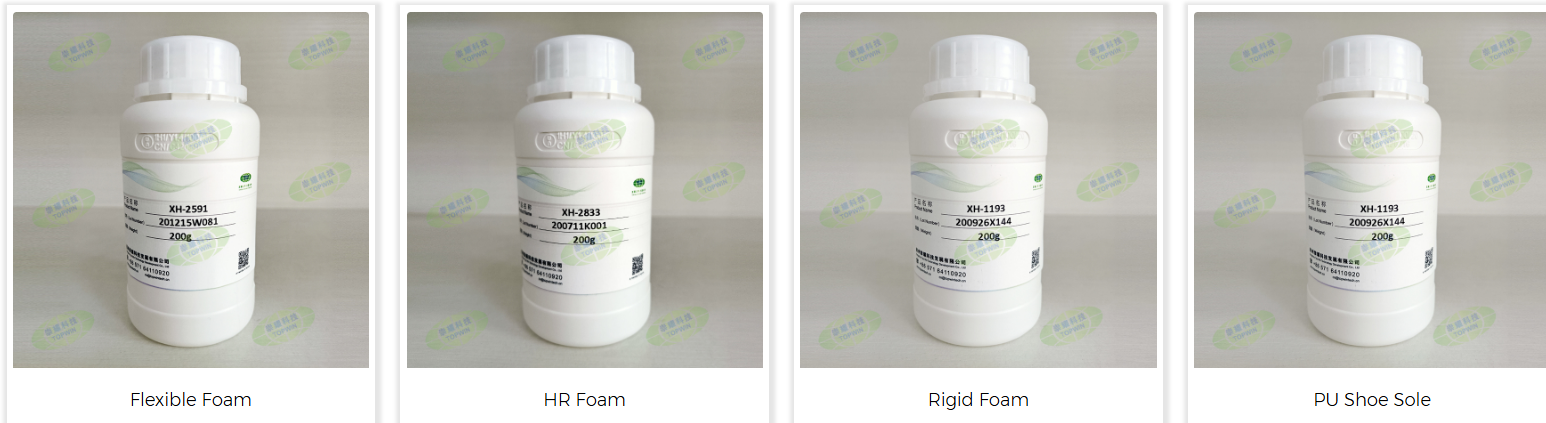
Silicone surfactants are specialized surface-active compounds featuring a silicone (polydimethylsiloxane) hydrophobic backbone and hydrophilic polyether side chains. They excel at lowering surface tension, enhancing liquid spreading, and stabilizing emulsions far more efficiently than traditional carbon-chain surfactants
In rigid polyurethane foam production, silicone surfactants act as:
Foam stabilizers
Cell structure regulators
Bubble control agents
Processing aids
Their main function is to stabilize the foam during the expansion process, preventing bubble collapse and helping create a consistent closed-cell structure. (嘉华)
A well-controlled cell structure is extremely important because the size and distribution of foam cells directly influence:
Thermal conductivity
Mechanical strength
Dimensional stability
Moisture resistance
During polyurethane foaming, chemical reactions generate gas bubbles that expand and form the foam structure. Without proper stabilization, these bubbles may merge, collapse, or create uneven cell structures.
Silicone surfactants work by:
Silicone surfactants lower the surface tension between the liquid polymer mixture and gas phase. This allows bubbles to form more easily and remain stable during expansion.
During the curing process, silicone surfactants create a flexible film around foam cells. This prevents bubble coalescence and improves cell uniformity.
A stable closed-cell structure helps reduce heat transfer, making rigid polyurethane foam an effective insulation material.
The amount and type of silicone surfactant used can influence foam morphology.
Proper selection helps achieve:
Fine and uniform cells
Improved insulation performance
Better surface quality
Reduced defects
Different polyurethane systems require different surfactant formulations depending on blowing agents, density requirements, and application conditions.
Silicone surfactants are available in different formulations to meet specific production requirements.
Low-viscosity grades are commonly used where fast mixing, good cell control, and efficient processing are required.
Typical applications include:
Refrigerator insulation
Freezer insulation
Pipe insulation
They help create fine cell structures that improve thermal performance.
High-viscosity products provide stronger foam stabilization and improved durability.
They are often used in:
Insulation boards
Construction panels
High-density rigid foam applications
These surfactants improve foam stability during expansion and help maintain consistent product quality.
Some silicone surfactants are designed for specific requirements, such as:
Hydrocarbon blowing systems
Low-emission formulations
Fire-resistant foam systems
High-temperature applications
Manufacturers select suitable surfactants according to the final product requirements and processing conditions.
One of the most important advantages of silicone surfactants is their ability to improve foam cell structure.
A uniform closed-cell structure reduces gas movement inside the foam, lowering thermal conductivity and improving insulation efficiency.
This makes silicone-stabilized polyurethane foam suitable for applications requiring excellent temperature control.
During production, polyurethane foam undergoes rapid expansion. Silicone surfactants help maintain foam stability throughout this process.
Benefits include:
Reduced foam collapse
Better dimensional stability
More consistent density distribution
This improves production efficiency and reduces material waste.
Silicone surfactants help reduce surface defects such as:
Uneven cells
Voids
Pinholes
Surface irregularities
Improved surface appearance is especially important for insulation panels and appliance applications.
Rigid polyurethane foam relies on closed-cell structures to prevent water absorption.
By improving cell uniformity, silicone surfactants help enhance resistance against:
Moisture penetration
Water vapor transmission
Environmental degradation
This extends the service life of insulation products.
Refrigeration equipment requires insulation materials with very low thermal conductivity.
Silicone surfactants help polyurethane foam achieve:
Fine closed-cell structure
Long-term insulation performance
Better energy efficiency
They are widely used in:
Household refrigerators
Commercial freezers
Cold storage equipment
Rigid polyurethane panels are commonly used in construction and industrial buildings.
Applications include:
Wall insulation panels
Roof insulation systems
Cold room panels
Silicone surfactants improve panel quality by providing stable foam expansion and consistent insulation performance.
PU foam pipe insulation is widely used in:
Heating systems
Refrigeration pipelines
Chemical processing equipment
Silicone surfactants help maintain thermal efficiency and mechanical durability in long-term service conditions.
Spray foam insulation requires rapid expansion and excellent foam stability.
Silicone surfactants improve:
Foam adhesion
Cell consistency
Expansion control
This makes them suitable for building insulation and industrial coating applications.
Choosing the correct silicone surfactant depends on several factors:
Different combinations of polyols, isocyanates, catalysts, and blowing agents require different surfactant technologies.
Low-density and high-density rigid foams may require different levels of stabilization.
The surfactant must be compatible with the blowing system, including hydrocarbon, HFC, or other environmentally friendly alternatives.
Important factors include:
Mixing speed
Reaction time
Temperature
Production method
Correct surfactant selection helps optimize both manufacturing efficiency and final product performance.
With increasing demand for energy-efficient insulation materials, polyurethane foam technology continues to evolve.
Future silicone surfactant developments focus on:
Lower VOC emissions
Better compatibility with sustainable blowing agents
Improved energy efficiency
Enhanced foam performance
New-generation silicone additives are being developed to support more environmentally friendly polyurethane insulation systems while maintaining high performance.
Silicone surfactants are essential additives in rigid polyurethane foam production. By controlling foam formation, stabilizing cell structures, and improving insulation performance, they help manufacturers produce higher-quality PU foam products for a wide range of industries.
From refrigerators and insulation panels to pipe systems and spray foam applications, silicone surfactants contribute to better thermal efficiency, durability, and product reliability.
As demand grows for energy-saving and sustainable insulation solutions, advanced silicone surfactant technologies will continue to play an important role in improving the performance of polyurethane foam systems.


